

Free Shipping Orders Over $399 Free Shipping Orders Over $399 Free Shipping Orders Over $399 Free Shipping Orders Over $399 Free Shipping Orders Over $399 Free Shipping Orders Over $399 Free Shipping Orders Over $399 Free Shipping Orders Over $399 Free Shipping Orders Over $399

Original price was: $88.00.Current price is: $45.75.

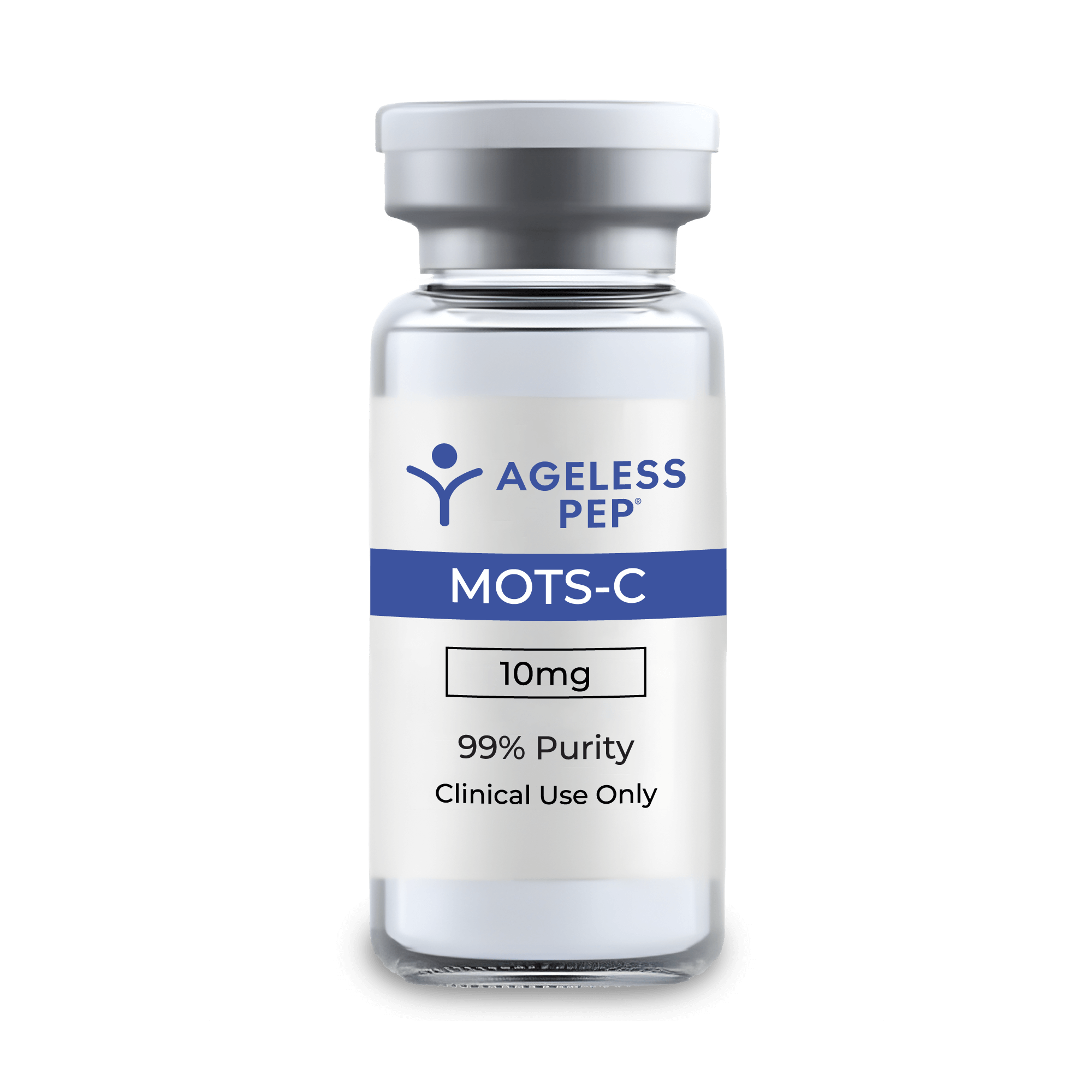
MOTS-C – 10mg Vial

Original price was: $88.00.Current price is: $45.75.

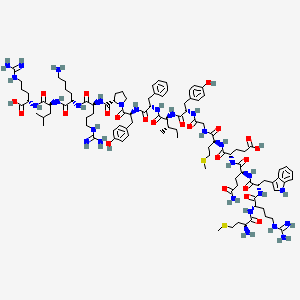
MOTS-c is a mitochondria-derived research peptide consisting of 16 amino acids (Met-Arg-Trp-Gln-Glu-Met-Gly-Tyr-Ile-Phe-Tyr-Pro-Arg-Lys-Leu-Arg). Encoded within the mitochondrial 12S rRNA gene, MOTS-c plays a key role in cellular metabolism and mitochondrial communication. Preclinical studies suggest it activates AMPK (AMP-activated protein kinase), supports mitochondrial homeostasis, and influences glucose metabolism and insulin signaling pathways.

In metabolic and longevity research, MOTS-c peptide is widely studied for its potential involvement in improving insulin sensitivity, regulating glucose uptake, enhancing cellular energy production, and supporting metabolic flexibility. As a mitochondrial signaling peptide, MOTS-c is a major focus in investigations related to metabolic health, stress adaptation, age-related metabolic decline, and overall energy regulation mechanisms.

Original price was: $88.00.Current price is: $45.75.

Disclaimer
Our products are sold in powder form and are typically reconstituted before use. Related materials such as syringes are not provided. Instruction for reconstitution or dosing is not included. These products are intended for research purposes only.

Molecule Profile

  • Chemical Name: Mitochondrial Open Reading Frame of the 12S rRNA-c

  • Sequence: Met-Arg-Trp-Gln-Glu-Met-Gly-Tyr-Ile-Phe-Tyr-Pro-Arg-Lys-Leu-Arg

  • Molecular Formula: C₁₀₁H₁₅₂N₂₈O₂₂S₂

  • Molecular Weight: 2174.62 g/mol

  • PubChem CID: 146675088

  • Solubility: Soluble in water; reconstitution in sterile or bacteriostatic water is required.

Product Overview

MOTS-c is a pioneering mitochondrial-derived peptide (MDP) involved in systemic metabolic communication and retrograde signaling between the mitochondrial network and the nuclear genome. It functions by inhibiting the folate cycle to facilitate the accumulation of AICAR, which subsequently triggers the activation of AMP-activated protein kinase (AMPK)—the cell’s master metabolic switch. This activation promotes catabolic pathways such as glucose uptake and fatty acid oxidation while inhibiting anabolic processes in experimental models. Beyond its role in energy homeostasis, MOTS-c serves as a stress-responsive signaling molecule that translocates to the nucleus to interact with transcription factors like NRF2, influencing cellular resilience. Preclinical research utilizes MOTS-c to investigate metabolic flexibility, exercise mimesis, age-related functional decline, and tissue-specific lipid regulation.


Key Areas of Research

Note: The following observations are derived exclusively from in-vitro and in-vivo animal models.

1. Metabolic Flexibility and Glucose Homeostasis In research models of diet-induced obesity, MOTS-c has been observed to prevent insulin resistance by upregulating GLUT4 translocation in skeletal muscle, allowing for insulin-independent glucose disposal. It participates in “metabolic rewiring” by promoting the “browning” of white adipose tissue, which increases energy expenditure through thermogenesis even in sedentary states.

2. Geroprotection and Muscle Preservation Studies investigate MOTS-c as a regulator of physical longevity. In aged animal models, the peptide has demonstrated the ability to reverse frailty metrics—such as grip strength and gait speed—to levels comparable to younger cohorts. This is partially attributed to its interaction with Casein Kinase 2 alpha (CK2α), which promotes myogenesis and muscle repair while downregulating myostatin, a negative regulator of muscle growth.

3. Nuclear Retrograde Signaling and Cytoprotection MOTS-c is utilized to study how mitochondria signal their status to the nucleus during metabolic stress. Research indicates that upon nuclear entry, the peptide binds to Antioxidant Response Elements (ARE), driving the expression of genes involved in antioxidant defense and stress resistance. This mechanism helps protect cellular integrity against oxidative damage and nutrient deprivation.
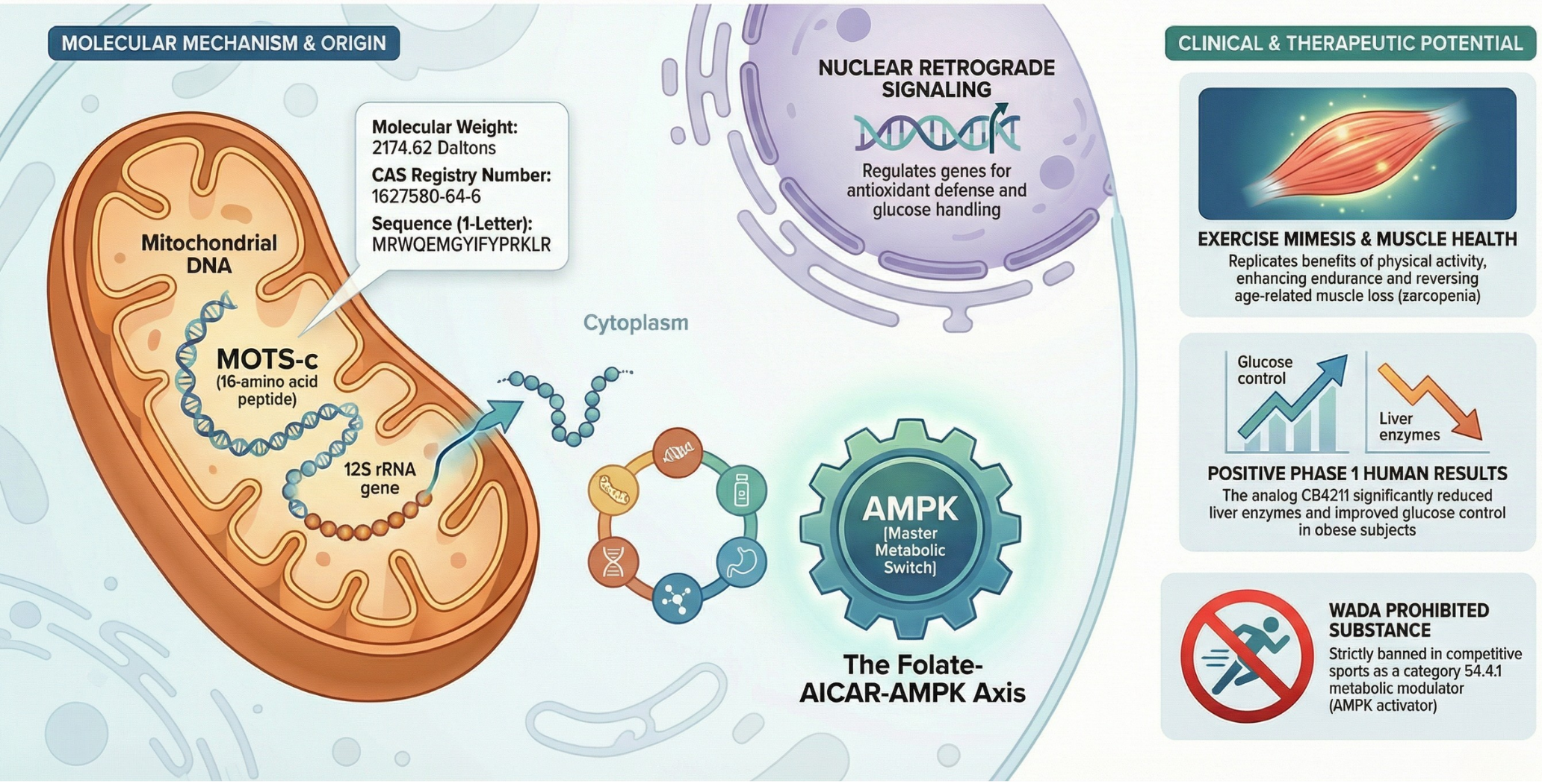
MOTS-C: The Mitochondrial “Exercise Mimetic”


Storage & Handling Guidelines

  • Lyophilized (Powder): Stable at room temperature for shipping (up to 3 weeks). Store at -20°C for long-term stability (12–24 months). Keep desiccated and protected from light.

  • Reconstituted (Liquid): Store at 4°C (39°F).

  • Stability: Use within 2–7 days of mixing, as the peptide is unstable in solution. Do not shake during reconstitution; gentle swirling is required to preserve the alpha-helical structure.

Storage Instructions

Our products are made using a freeze-drying (lyophilization) process, which helps keep them stable during shipping for up to 3–4 months.

When the peptide is in its dry powder form, it can be stored at room temperature until you are ready to use it.

Once the peptide is mixed with bacteriostatic water (reconstituted), it should be stored in the refrigerator to maintain freshness and effectiveness. After mixing, the peptide will remain stable for up to 30 days when kept refrigerated.

Freeze-drying works by removing moisture while the peptide is frozen, leaving behind a dry, white powder that stays stable until it is rehydrated. This process helps protect the peptide and extend its shelf life.

After receiving your order, keep peptides away from direct light and heat. If you plan to use them within a few weeks or months, refrigeration below 4°C (39°F) is recommended, though short-term room-temperature storage is generally acceptable for dry peptides.

For long-term storage (several months to years), peptides should be kept in a freezer at −80°C (−112°F) to best preserve their quality and stability.

Important: All peptides offered are intended for in-vitro and pre-clinical research only. Not for human use. Not approved by the US FDA for medical conditions.

Peptides are short chains of amino acids, typically under 50 residues, whereas proteins are much longer and fold into complex structures.
Because peptides are smaller, they tend to:

  • Bind more selectively to receptors

  • Have faster biological signaling effects

  • Be easier to synthesize and modify for research
    This makes them ideal for targeted experiments in regeneration, metabolism, and cellular communication.

  • Ageless Pep provides high-purity, lab-tested research peptides.

  • The team is dedicated to scientific accuracy and excellent customer support.

  • The platform serves a community of researchers and scientists committed to innovation.

Depending on the study design, peptides can be researched through:

  • In-vitro assays

  • Animal models

  • Cell cultures

  • Subcutaneous or intravenous administration (in animals)

Each peptide behaves differently — for example, Semaglutide and Tirzepatide are studied via subcutaneous injections, while others like BPC-157 show effects even when administered orally or parenterally in rodent studies.

Peptides generally require:

  • Cool, dry storage when lyophilized

  • Refrigeration after reconstitution

  • Protection from UV light and temperature fluctuations

This preserves molecular integrity, preventing oxidation or breakdown of amino-acid chains.
Proper storage ensures reproducibility of experimental results.

High-quality research peptides often exceed 98–99% purity, validated through HPLC and Mass Spectrometry.
The guide notes Ageless Pep’s commitment to lab-tested, high-purity peptides verified through strict protocols.
Peptide bioavailability depends on:
  • Molecular weight
  • Receptor affinity
  • Use of fatty-acid modifications (e.g., GLP-1 di-acid component for long-acting effects)
  • PEGylation to extend half-life (e.g., PEG-MGF)
  • Route of administration
  • Enzyme resistance (e.g., BPC-157’s stability in gastric acid)
Peptides like GLP-1 and GLP-2 activate GLP-1 and GIP receptors, influencing:
  • Appetite regulation
  • Insulin secretion
  • Gastric emptying
  • Blood glucose stabilization
  • Energy expenditure
Multiple clinical trials cited in the guide show significant reductions in HbA1c, body weight, and cardiometabolic markers
Depending on the study design, peptides can be researched through:
  • In-vitro assays
  • Animal models
  • Cell cultures
  • Subcutaneous or intravenous administration (in animals)
Each peptide behaves differently — for example, GLP-1, GLP-2 AND GLP-3 are studied via subcutaneous injections, while others like BPC-157 show effects even when administered orally or parenterally in rodent studies.

Our products are made using a freeze-drying (lyophilization) process, which helps keep them stable during shipping for up to 3–4 months.

When the peptide is in its dry powder form, it can be stored at room temperature until you are ready to use it.

Once the peptide is mixed with bacteriostatic water (reconstituted), it should be stored in the refrigerator to maintain freshness and effectiveness. After mixing, the peptide will remain stable for up to 30 days when kept refrigerated.

Freeze-drying works by removing moisture while the peptide is frozen, leaving behind a dry, white powder that stays stable until it is rehydrated. This process helps protect the peptide and extend its shelf life.

After receiving your order, keep peptides away from direct light and heat. If you plan to use them within a few weeks or months, refrigeration below 4°C (39°F) is recommended, though short-term room-temperature storage is generally acceptable for dry peptides.

For long-term storage (several months to years), peptides should be kept in a freezer at −80°C (−112°F) to best preserve their quality and stability.